

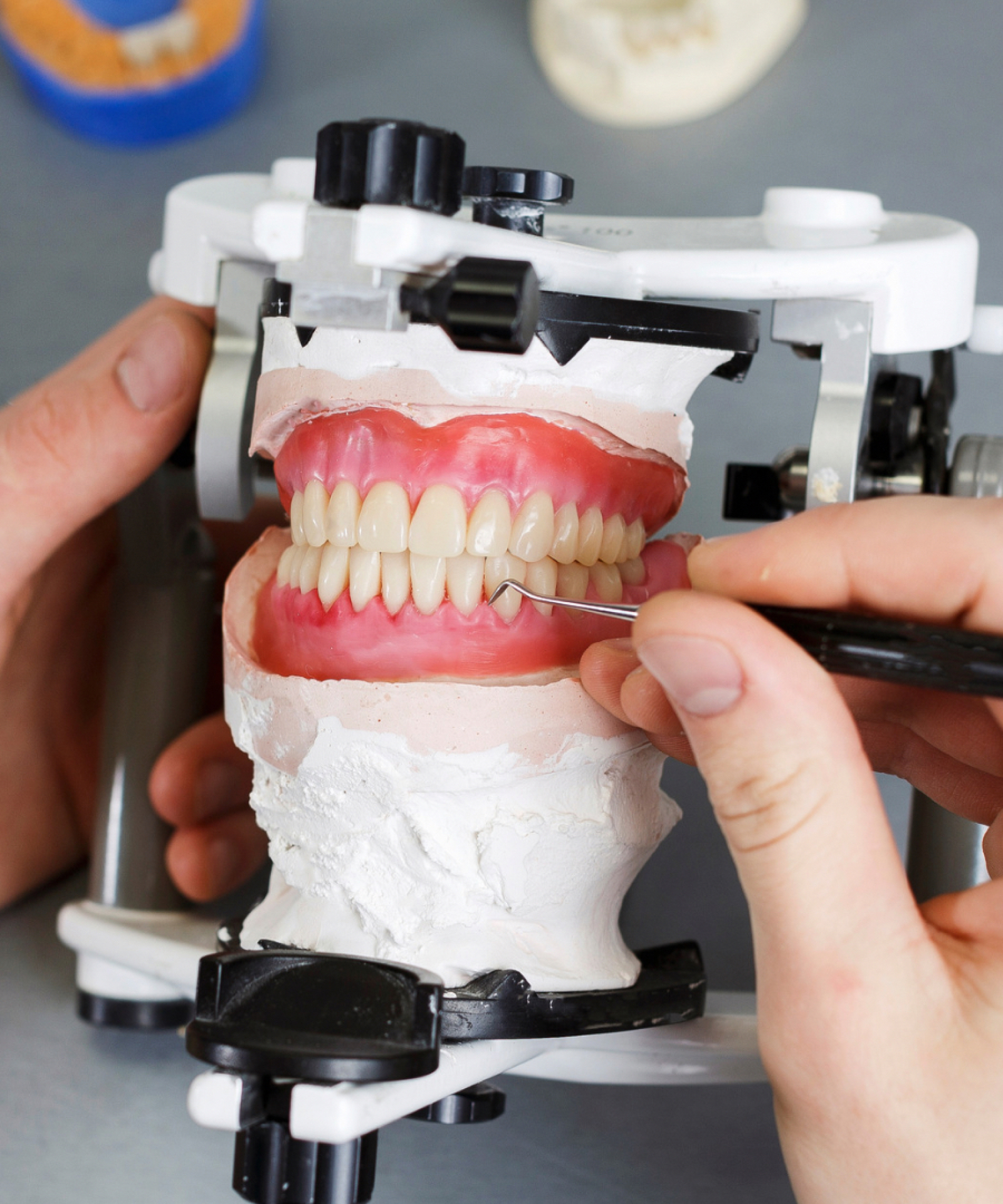
What is Tooth Prosthetics?
Tooth prosthetics is a process aimed at restoring the functionality and aesthetics of the dental arch. This procedure is performed by an orthopedic dentist who determines the need for a specific type of prosthetics. Today's tasks in orthopedic dentistry not only involve restoring the tooth's function for proper chewing but also take into account the importance of the aesthetic aspect of the future prosthetic construction.
The Importance of Prosthetics
The loss of even a single tooth negatively affects a person, not only from an aesthetic perspective. Missing a tooth leads to additional load on other teeth, disrupts the proper alignment of the dental arch, affects the shape of the face, complicates the chewing process, and impacts overall quality of life.
Types of Dental Prosthetics
There are two main categories of dental prosthetics: removable and fixed.
- Removable Prosthetics:
- Full Dentures: These are nylon or plastic dentures. They are cost-effective but require time for the patient to adjust and do not always have stable fixation.
- Partial Removable Prosthetics: These are plastic or nylon prosthetics with hooks or clasps. They can be more stable and provide better fixation.
- Fixed Prosthetics:
- Dental Crowns: These are single crowns or crowns with a cantilever.
- Bridges: These are constructions that connect two or more teeth, restoring the gaps between them.
- Micro-Prosthetics: These include veneers, overlays, or inlays, which are used to restore the aesthetics and functionality of teeth.
Implant-Supported Prosthetics
Implant-supported prosthetics is one of the most advanced methods for restoring lost teeth. This process involves placing a titanium base in the jaw, onto which orthopedic constructions are then attached. Implantation can be used regardless of the number of missing teeth.
Veneers
Veneers are thin, aesthetic overlays placed on the front surface of teeth and made from ceramic. They are created in a laboratory based on digital impressions of the patient's teeth.
When do we recommend ceramic veneers:
- If teeth have a tendency to quickly wear down the enamel, ceramic veneers provide additional protection for the teeth.
- To close gaps between central teeth, ceramic veneers can help eliminate them.
- In case of damage or chipping of teeth, the installation of ceramic veneers is also recommended.
- Ceramic veneers can be used to correct disproportionate tooth size.
- Discoloration of teeth or the presence of yellow stains due to age, illness, or bad habits can also be corrected with veneers.
Advantages of installing ceramic veneers include:
- Providing maximum protection and care for teeth. Ceramic veneers act as a “shield” against microorganisms that constantly affect the tooth enamel.
- Minimal grinding of tooth enamel to attach the overlays.
- Selection of the most natural tooth color.
- Long-term use of ceramic veneers if following the doctor's care recommendations. They can last practically the entire life of the patient.
Entrust Your Health to Professionals
Our specialists provide a high level of service and use modern techniques to guarantee long-lasting and high-quality results.